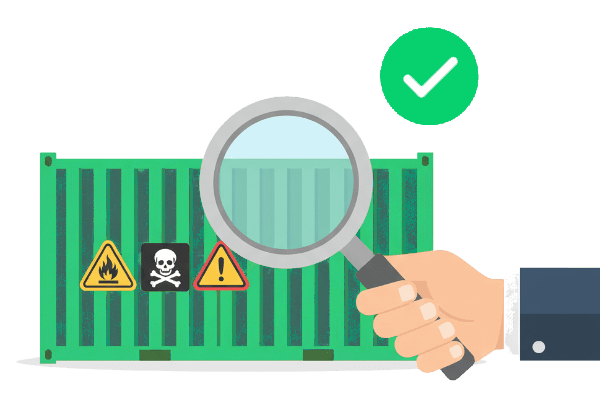
By using globally recognized hazard labels, documentation and packing rules, IMCO makes sure dangerous goods are shipped, stored and handled safely throughout the maritime logistics chain. Labels measure 100 mm (3.9 in) on all sides.
Class 1 · Explosives
Divisions 1.1 – 1.6
Class 2 · Gases
Flammable, non-flammable and toxic gases: divisions 2.1 – 2.3
Class 3 · Flammable liquids
Liquids that give off flammable vapour
Class 4 · Flammable solids
Flammable solids, spontaneously combustible, and dangerous when wet: divisions 4.1 – 4.3
Class 5 · Oxidizers & organic peroxides
Divisions 5.1 and 5.2
Class 6 · Toxic & infectious substances
Poison, inhalation hazard, infectious substance: divisions 6.1 and 6.2
Class 7 · Radioactive material
Categories I, II and III, and fissile material
Class 8 · Corrosives
Substances that damage skin or metal
Class 9 · Miscellaneous dangerous goods
Other hazardous materials, including lithium batteries
Hazardous materials warning labels
Shipping dangerous goods? Read our guide to IMCO/IMDG regulations.
Let’s move the world together.
Whether it’s a single shipment or a full-scale logistics partnership, Falcon Freight delivers seamless solutions built on trust and expertise.